


A store visit report is one of the most practical tools in retail operations, yet it is often treated as a formality rather than a driver of real change. When done well, it turns a subjective walkthrough into a structured, repeatable record: what was checked, what passed, what failed, and who is responsible for fixing it.
This guide covers everything you need to know about store visit reports, from the essential elements every report should include to how they differ from store audits. If you manage multiple locations or oversee field operations, this is the place to start.
What is a Store Visit Report?
A store visit report evaluates a retail location’s performance against brand, operational, and compliance standards. It goes well beyond a casual walkthrough. Every observation is recorded, evidence (including photos) is captured, scores are assigned, and required corrective actions are logged, creating a documented accountability trail that follows up across future visits.
At its core, a store visit report turns a subjective in-person visit into an objective, repeatable measurement. Instead of leaving a store with a rough mental impression, managers leave with a structured record: what was checked, what passed, what failed, who is responsible for fixing it, and by when.
Who Uses Store Visit Reports?
Store visit reports are used across a wide range of roles in retail and field operations:
-
Area managers overseeing multiple locations in a region
-
Regional managers benchmarking performance across districts
-
Field sales and brand representatives visiting retail partners
-
Franchise operators checking compliance across franchisee-owned sites
-
Vendor and supplier reps auditing in-store execution of their products
Store Visit Report vs. Store Audit: What Is the Difference?
Before moving ahead, let’s clear a common misconception: a store audit and a store visit report are not the same although the terms are often used interchangeably, there is a clear practical distinction between them.
A store visit report tends to be broader, ongoing, and relationship-focused. It is completed regularly to track progress over time and maintain a collaborative dynamic between field managers and store teams.
A store audit, by contrast, is typically more formal and compliance-driven. It may be conducted by an independent party or a dedicated internal audit team, and it often carries higher stakes. That said, many organizations use both terms to describe the same process. This guide covers both.
What Do Retail Store Visit Reports Typically Cover?
A strong store visit report does not leave room for vagueness. Every section serves a purpose: capturing the right data, in the right format, so that store teams and area managers can act on it without ambiguity.
Below are the eight essential elements that every report should cover, whether you are building a template from scratch or refining an existing one.
Visit Metadata
Before a single observation is recorded, the report needs to establish its own context. This includes the store name, ID, and location; the date, time, and duration of the visit; the name and role of the person conducting the visit; and the visit type, whether it was scheduled, unannounced, a follow-up, or a campaign-specific check.
This information sounds administrative, but it matters more than most managers realise. Unannounced visits and scheduled visits often produce very different results. Tracking visit type over time reveals whether a store only performs when it expects to be assessed.
Visual Merchandising and Planogram Compliance
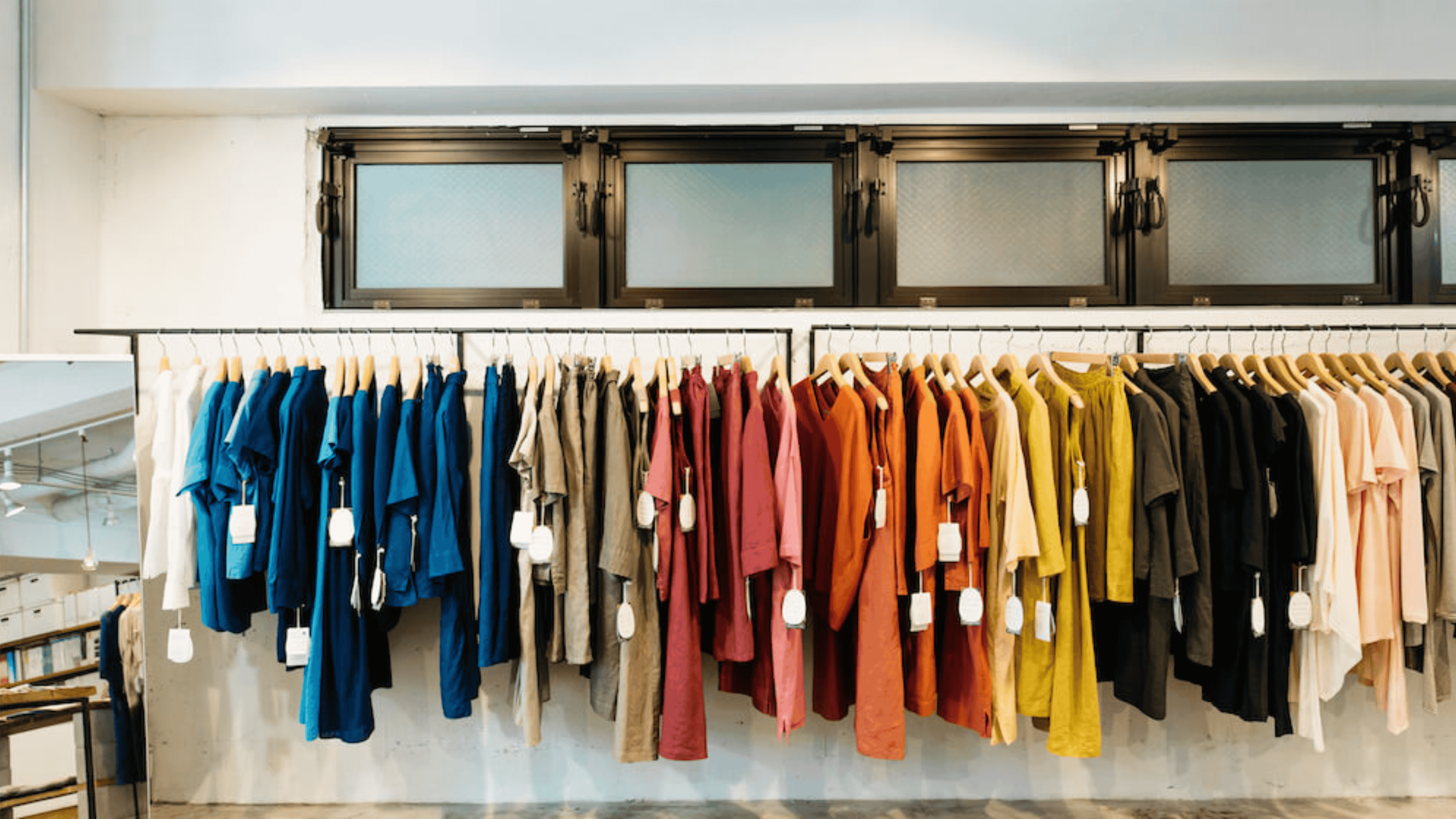
Visual merchandising & planogram measures whether the store floor looks the way it is supposed to look. Check product placement against the approved planogram, assess shelf availability and facing counts, and review all point-of-sale materials, promotional displays, and branded fixtures. Also note whether signage and colour usage is consistent with current brand guidelines.
Photos are essential here. A written note that says “shelf looked disorganised” is far less useful than a timestamped image sitting alongside the planogram specification.
With Amply AI, teams can capture planogram execution and visual merchandising checks in one structured workflow, making it easier for head office to review compliance, spot gaps quickly, and take action faster.
Cleanliness, Safety and Health Standards
Cover the full footprint: sales floor, fitting rooms, back-of-house, and stockroom. Note the condition of equipment, whether maintenance records are up to date, and whether health and safety signage is correctly displayed and visible. This section often gets rushed during a visit because it feels routine. Do not let that happen. Consistent standards in cleanliness and safety are a direct signal of store culture.
Staff Presentation and Service Quality
Observe without interfering. Check that uniforms and grooming standards are being met. Watch a customer interaction if you can, and note how the greeting, the product conversation, and the close were handled. Look for training compliance markers : does the team demonstrate accurate product knowledge? Are upselling behaviours present in the right contexts? Has the team received adequate on-the-job training?
Avoid turning this section into a personal critique of individual staff members. Focus on observable, measurable behaviours tied to brand standards and training outputs.
Inventory and Stock Availability
Record any out-of-stock items relative to planogram requirements and note whether the stockroom is organised in a way that makes replenishment straightforward. Check that FIFO (first in, first out) rotation is being applied correctly, particularly for food, health, or perishable categories. Flag any delivery backlog, waste observations, or stock discrepancies that require follow-up from the operations team.
Pricing, Promotions and Signage Accuracy
Compare physical price labels against current system prices. Verify that any active promotional mechanics are correctly set up and that the right materials are in the right locations. Mislabelled or expired price cards are a compliance risk and a customer experience failure. Even a small number of pricing errors in a single visit is worth escalating quickly.
KPIs and Performance Metrics
Where data is accessible during the visit, record how the store is tracking against its sales target. Note any observations related to waste levels, shrinkage, conversion patterns, or queuing behaviour. While every visit doesn’t require a full review, adding some performance signals to your notes provides more insight than simple compliance scores.
Action Plan
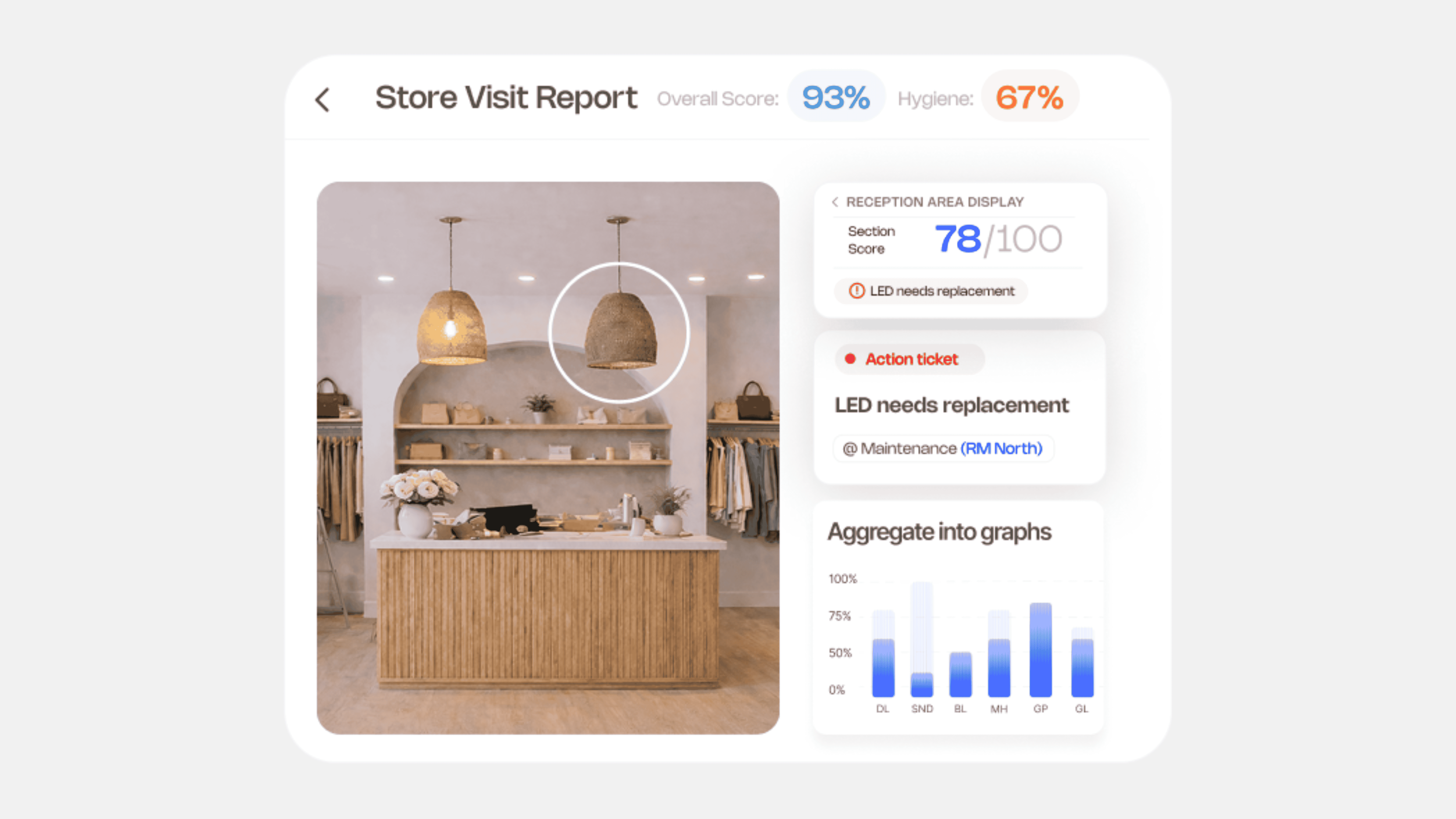
This is the section that most store visit reports handle poorly, and it is the one that determines whether a visit actually drives improvement.
Every issue identified in the report must be linked to a named owner, a specific action , and a clear deadline. Vague instructions like “improve cleanliness” are not action items. “Store manager to deep-clean the stockroom and update the maintenance log by Thursday” is.
Before closing the action plan, cross-reference any outstanding items from the previous visit. Were they completed? Partially completed? Ignored? Carrying forward unresolved actions without comment is one of the fastest ways to undermine the credibility of the entire reporting process.
Assign a severity rating to each action so that store managers know where to focus first:
-
Immediate fix required before the visit is closed
-
Within 48 hours for issues that are urgent but not critical
-
By next visit for lower-priority improvements that need monitoring
A well-constructed action plan is what separates a store visit report from a store visit. The observation is just the input. The action plan is the output that actually changes things.
Store Visit Report Example (Filled Sample)
Most guides will hand you a blank template and leave you to figure out the rest. This section does something different. Below is a fully completed store visit report for a mid-size fashion retail store , written from the perspective of an area manager conducting a scheduled quarterly review. Each section includes commentary on what good looks like and why certain entries are written the way they are.
Sample Report: Fashion Retail Store, Area Manager Visit
Visit Details
FieldEntryStore NameUnit 14, Manchester ArndaleStore IDMCR-014DateTuesday, 8 April 2025Visit TypeScheduled quarterly reviewVisit Duration2.5 hoursArea ManagerSarah Patel, Area Manager, North West RegionStore Manager PresentYes, James Okafor
** Why this matters:**Recording the store manager’s presence is not just administrative. If a finding is disputed later, you need a clear record of who was on-site, who was briefed, and who signed off on the action plan. Always name the person, not just the role.
Scored Findings
1. Visual Merchandising and Planogram Compliance: 7 / 10
The front window display is fully compliant with the March-April seasonal brief. Promotional hero products are correctly positioned and priced. However, mid-floor mannequins are still dressed to the February brief, two weeks behind schedule. The seasonal changeover should have been completed by 25 March per the VM calendar. Photos attached: Window display (compliant), Mid-floor mannequins (non-compliant, reference February brief attached).
Why 7 and not lower:The window is the highest-visibility surface in the store. Compliance there limits the customer impact of the mid-floor lapse. Scoring reflects both what is right and what is wrong, not just the worst finding.
2. Cleanliness, Safety and Health Standards: 9 / 10
Fitting rooms are in excellent condition. All cubicles clean, mirrors unsmudged, return rail clear and organised. Sales floor well-maintained. One point deducted: the stockroom has a partially blocked fire exit (cardboard delivery boxes stacked against the door). This is an immediate safety issue and has been verbally escalated to the store manager during the visit. The maintenance log is up to date and signed.
Why note the verbal escalation:If a fire exit obstruction is identified and not followed up, and an incident occurs, the report is part of the evidence trail. Noting that it was raised on-site protects the area manager and creates a clear record for the store manager.
3. Staff Presentation and Service Quality: 8 / 10
Overall uniform compliance is strong. Twelve of thirteen staff observed were in full, approved uniform. One team member on the fitting room desk was wearing non-approved footwear (white trainers instead of the black closed-toe shoes specified in the uniform guide). Two customer interactions were observed during the visit. Both were greeted promptly and received accurate product information. One upsell opportunity was missed at the point of handback after a fitting room visit, with no reference to the current multi-buy promotion.
What good looks like here:Specific, behavioural, observable. Not “staff seemed friendly” but what actually happened during a real interaction and where the gap was. This is the standard every line in this section should meet.
4. Inventory and Stock Availability: 6 / 10
Three core SKUs are currently showing zero-facing on the sales floor despite confirmed stock in the back-of-house system. SKUs affected: BLK-SLIM-32, WHT-CREW-M, NVY-CHINO-30. Stockroom stock was verified during the visit. FIFO rotation is being applied correctly on all visible bays. No waste or delivery backlog issues observed. The out-of-stock presentation is the sole driver of the lower score, and it is entirely recoverable today.
Why name the SKUs: A report that says “some products were out of stock” creates no urgency and enables deniability. Naming the specific items means the store manager cannot close the action without checking those three products specifically.
5. Pricing, Promotions and Signage Accuracy: 10 / 10
Full spring promotional rollout has been executed correctly. All promotional price labels match system prices. Multi-buy mechanics are correctly signed at the point of selection and at the till. No expired or mislabelled price cards identified across the sales floor or fitting room area.
Score a 10 when it is earned:Not every section needs a finding. Acknowledging what is done well builds trust with the store team and gives the overall score credibility. A report that only ever finds problems quickly loses its relationship value.
Action Plan
This is the section that converts a store visit into measurable change. Every item below follows the same format: action, named owner, deadline, severity. There are no vague instructions here. Each item is specific enough that a different manager could walk in tomorrow and verify whether it has been completed.
-
Restock 3 items from back-of-house to sales floor
Owner: Store Manager (James Okafor)
Deadline: Today, close of business
Severity: Immediate -
Clear fire exit in stockroom and photograph for report
Owner: Store Manager (James Okafor)
Deadline: Within 2 hours of visit close
Severity: Immediate -
Update mid-floor mannequins to April brief by Friday 11 April
Owner: VM Lead (Priya Shah)
Deadline: Friday 11 April
Severity: 48 hours -
Address non-compliant footwear with team member by next shift
Owner: People Manager (TBC by Store Manager)
Deadline: Next scheduled shift
Severity: 48 hours -
Add mid-floor VM compliance to weekly walk checklist
Owner: Store Manager (James Okafor)
Deadline: By next visit
Severity: N/A
Outstanding actions from previous visit (January 2025): All three actions from the January visit were completed and verified. Stockroom labelling system was implemented (confirmed on-site today). No carry-forwards required.
Why check previous actions first:A report that never circles back on past findings sends a clear message to store teams: the actions are optional. Closing the loop, even briefly, signals that the process has memory and that follow-through is expected.
OVERALL SCORE: 40 / 50 (80%)
Summary for record: MCR-014 is a well-run store with clear strengths in customer standards, pricing execution, and stockroom organisation. The two immediate actions (fire exit and stock replenishment) are recoverable today and do not reflect systemic issues. The VM brief lag is the one pattern worth watching across the next two visits. Recommend area manager check-in call on Friday to confirm actions 1 to 4 are closed.
Role-Specific Store Visit Checklists
Not every store visit serves the same purpose. An area manager checking in on a struggling city-centre store has very different priorities from a regional manager conducting a quarterly district review. The checklist you use should reflect the role you are in and the decisions your findings will inform. Below is a breakdown of the three most common use cases.
(I) Area Manager Store Visit Report Checklist
Area managers are typically closest to the stores. They visit most frequently, know the teams personally, and are best placed to identify whether a problem is a one-off blip or a developing pattern.
Focus: District-level patterns. Is this an isolated issue or something showing up across multiple locations?
Cadence: Typically one to two visits per store per month for core stores, with higher frequency for underperformers.
Priorities: Brand and operational compliance, staff behaviour, and action plan follow-through from the previous visit.
Key question to answer on every visit: Is this store trending up or down compared to last quarter?
Checklist emphasis: Consistency across the full patch. Scoring must be calibrated the same way across all stores, otherwise the data cannot be used for meaningful benchmarking. An 8/10 in one store should mean the same thing as an 8/10 in another.
(II) Regional Manager Store Visit Checklist
Regional managers operate at a higher altitude. Their visits are less frequent but carry more strategic weight. Their findings feed into board-level reporting and inform decisions about investment, resourcing, and market strategy.
Focus: Strategic performance across districts. Is the area management layer working? Are best practices spreading between stores?
Cadence: Typically quarterly deep-dives per store, with lighter spot-checks in between.
Priorities: KPI performance trends, area manager effectiveness, and compliance with strategic initiatives rather than day-to-day operational detail.
Key question to answer: Are top-performing stores actively sharing what is working with underperformers, and is that knowledge transfer being facilitated?
Checklist emphasis: Fewer categories, higher-level scoring. Regional managers should delegate the granular operational detail to their area managers. Their job is to assess the system, not to recheck the shelf facings.
(III) District Manager Store Visit Checklist
District managers sit between area and regional leadership, translating strategy into consistent execution across a defined cluster of stores. Their role is to ensure that operational standards are being applied uniformly while identifying patterns that require escalation or support.
Focus: Cross-store consistency within the district. Are stores executing to the same standard, and where are the gaps between top and bottom performers?
Cadence: Typically monthly visits per store, with additional follow-ups for stores showing performance or compliance issues.
Priorities: KPI alignment, planogram and VM compliance, operational consistency, and area manager effectiveness in driving execution.
Key question to answer: Are all stores in the district operating at a consistent standard, and what is preventing underperforming stores from closing the gap?
Checklist emphasis: Balanced scoring across operations and performance. District managers should validate that area manager audits are accurate while adding a layer of comparative analysis across stores. The goal is not just to identify issues, but to standardize what “good” looks like across the district and ensure it is repeatable.
Vendor and Supplier Store Visit Reports
Vendor and supplier visits serve a fundamentally different purpose. Rather than assessing an internal operation, they assess how well a retail partner is executing your brand’s in-store presence.
Categories to cover: Product placement and share of shelf, POS and display material compliance, competitor positioning in the same fixture, and overall brand visibility relative to what was agreed commercially.
Tone and output: These reports are typically shared externally with the retail partner. The language must be collaborative and constructive. A punitive tone damages the commercial relationship without improving execution. Frame findings as opportunities and tie them to commercial outcomes the retailer cares about, such as rate of sale and promotional uplift.
How Often Should You Conduct Store Visits?
Visit frequency is one of the most practically debated topics in retail field management, and one that almost no guide addresses directly. The right cadence depends on store tier, trading context, and what the data is telling you. Below is a working framework.
Recommended Cadence by Store Tier
High-volume and flagship stores: Weekly scheduled visit as a minimum, with at least one unannounced spot-check per month. These stores carry the most brand weight and the most revenue risk.
Core performing stores: Fortnightly scheduled visit plus a monthly area manager review. Enough contact to maintain standards without over-managing a team that is broadly performing well.
Underperforming stores: Weekly visits until performance stabilises across two consecutive reporting periods. Increased visit frequency is not punitive. It is a signal that the business is investing attention in recovery, and it creates the accountability structure that underperforming stores need.
New store openings: Daily check-ins for the first two weeks of trading, then weekly visits through the 90-day period. New teams need more contact, more feedback, and more opportunity to ask questions before habits form.
Triggered vs. Scheduled Visits
Scheduled visits are predictable. Stores can prepare, teams can be briefed, and the format becomes familiar. This is good for relationship-building, compliance reviews, and structured feedback conversations.
Unannounced visits reveal what the store actually looks like on an ordinary Tuesday. They are the most accurate signal of true day-to-day standards, and they are essential for underperformers or any situation where post-incident accountability is required.
The best-practice position is to use both. Stores should always be operating at visit-ready standard, not just when they know someone is coming. A culture where standards only appear on scheduled visit days is a compliance performance, not a compliance standard.
Seasonal and Campaign Visit Spikes
Increase visit frequency in the two weeks before and during peak trading periods: Christmas, bank holiday weekends, and sale season. Standards slip fastest when teams are under the most pressure, and that is exactly when the brand is most visible to customers.
For new product launches and campaign activations, visit within 48 hours of launch to verify that execution has landed correctly. A campaign that takes a week to be correctly implemented in-store is a week of lost commercial impact.
After any visit that results in a failing score, always schedule a corrective follow-up one to two weeks later. The follow-up visit is not optional. It is what gives the original report its teeth.
Common Mistakes in Store Visit Reports (and How to Fix Them)
Even experienced field managers fall into patterns that quietly undermine the value of their reporting. These are the six most common mistakes, and the specific fix for each.
1. Inconsistent Scoring Across Managers
** The problem** : two area managers visit comparable stores and produce scores that differ by four or five points for the same category. When scores mean different things to different people, benchmarking becomes meaningless and store managers lose confidence in the process.
The fix : build a shared scoring rubric with visual anchors. Include photos of what a 3/10 looks like versus an 8/10 for each category. Calibration sessions where managers score the same set of photos together before going into the field are one of the most effective investments a retail ops team can make.
2. Vague Action Items
** The problem** : “improve stock availability” appears in the report. Nobody knows what product, which shelf, who is responsible, or by when. The action closes itself by default because it was never specific enough to be verified.
The fix: every action must have a named owner, a specific task, and a deadline. If you cannot fill all three fields, the action is not ready to be written yet. Go back to the finding and be more precise.
3. No Photo Evidence
** The problem** : written descriptions are subjective. “Shelves looked untidy” is an opinion. A photo is a fact. Without images, findings can be disputed, context is lost, and the report loses its value as a reference document for future visits.
The fix: make photo capture mandatory for any finding scored below 7/10, and for every item included in the action plan. The photo is the evidence that the action is necessary. It is also the comparison point that proves the action was completed.
4. Visiting Without a Structured Checklist
** The problem** : different managers check different things, in different orders, with different levels of attention. Visit quality becomes person-dependent rather than system-dependent. The data you collect cannot be aggregated or compared because it was never standardised to begin with.
The fix: standardise the checklist across the entire field team. Everyone measures the same categories in the same sequence. Individual managers can add observations, but the core structure must be consistent.
5. No Follow-Up on Previous Actions
** The problem** : unresolved actions from one visit carry silently into the next, and the one after that. Store managers learn, correctly, that the actions are not enforced. The reporting process becomes a ritual rather than a management tool.
The fix : open every visit by reviewing the previous action plan. Mark each item as resolved, in progress, or escalated. Do this before you walk the floor. It signals immediately that this visit has memory, and that what was agreed last time still matters.
6. Reporting Findings Without Insights
** The problem** : “stock was low on three SKUs” is a description. It tells the business what happened but not why, and not what should change as a result. A report full of descriptions is an expensive way to produce a document that nobody acts on.
The fix : for any significant finding, add a root cause observation and a systemic recommendation. “Low stock on three core SKUs, likely linked to the Tuesday delivery gap at this store. Recommend reviewing the delivery schedule for stores in this distribution cluster.” That is a finding that earns a conversation at the operations level.
How to Analyse and Present Store Visit Findings
Collecting visit data is only half the job. The other half is turning that data into something a leadership team can act on. This is the part of the store visit process that most field operations guides ignore entirely.
Aggregating Results Across Multiple Stores
Start by compiling individual visit scores into a single tracker, whether that is a spreadsheet or an audit software dashboard. Then group the data in ways that surface patterns: all stores’ VM scores together, performance by region, results by store tier, or findings by area manager.
Systemic patterns are the most important output of this aggregation. If 70 percent of stores in a region score below 6/10 on staff presentation across two consecutive reporting periods, that is not a store-level performance issue. It is a training gap, a management gap, or a structural problem with how the standard is being communicated. Individual store scores can obscure this signal. Aggregated data makes it visible.
Flag outliers in both directions. Best-performing stores are as analytically valuable as worst performers. Capturing what they are doing differently, and whether that can be systematised, is one of the highest-value activities a regional manager can undertake.
Metrics to Include in Leadership and HQ Reporting
When presenting store visit findings upward, include the following:
-
Average score by category across all stores this period versus last period
-
Percentage of stores with open critical actions (immediate or 48-hour severity) that remain unresolved after seven days
-
The top three recurring issues by category, which are almost always training or process failures worth escalating
-
Top five and bottom five store rankings with trend direction: improving, stable, or declining
-
Action plan completion rate by area manager, which surfaces accountability gaps in the field management layer itself
Building a Monthly Store Performance Summary
For board-level reporting, a one-page format works best: overall network score, three key wins, three key risks, and recommended actions. Keep it decision-ready.
For operations directors, include a full appendix: store-by-store breakdowns, a category heatmap showing which areas are consistently underperforming, and area manager performance comparisons.
Before-and-after photos of high-impact improvements are worth including wherever they exist. They make findings tangible to senior leaders who do not visit stores regularly, and they create a visible record of progress that motivates field teams.
For networks of up to 50 stores, a monthly summary is the minimum. Networks of 50 or more stores benefit from a weekly pulse report alongside the monthly deep-dive.
The Bottom Line
Retail success isn’t just about having a great product; it’s about ensuring that the vision created at HQ actually lands on the shelves. A store visit report is the bridge between strategy and reality. Without a structured, digital way to record these visits, you aren’t managing your stores, you’re just visiting them.
Amply transforms the store visit from a paper-shuffling formality into a high-octane operational engine. By digitizing checklists, automating action plans, and providing real-time visibility into every location, Amply ensures that “good enough” is replaced by brand-standard excellence. If you want your retail operations to be as sharp as your digital storefront, you need a system that works as fast as you do.
Ready to close the execution gap? Book a meet to see how Amply works →
Frequently Asked Questions
What is a store visit report?
A store visit report is a structured document completed by a field manager or area manager after visiting a retail location. It records observations across key operational and brand standards categories, scores each area, attaches photo evidence, and lists required actions with named owners and deadlines.
How do you write a store visit report?
Start with visit metadata (store name, date, manager name, and visit type), then work through each category on your checklist: visual merchandising, cleanliness, staffing, stock, pricing, and KPIs. Score each area, attach photo evidence for any finding below your passing threshold, and close with a clear action plan where every item has a named owner, a specific task, and a deadline.
What do retail reports typically cover?
Retail reports cover sales performance, inventory status, store operations, visual merchandising compliance, customer behavior, and promotion effectiveness to guide data-driven decisions.
What is the difference between a store visit and a store audit?
A store visit report is typically conducted regularly by internal field managers as part of ongoing performance management. A store audit tends to be more formal and compliance-driven, and may be conducted by an independent or third-party team. In practice, many retailers use the terms interchangeably. The principles and structure are largely the same.
What should a store visit checklist include?
A store visit checklist should cover visual merchandising and planogram compliance, cleanliness and health and safety standards, staff presentation and service quality, stock availability and FIFO compliance, pricing and promotional accuracy, and a KPI review where data is accessible during the visit.


