


Studies show that somewhere between 20 and 40% of in-store promotional activity never executes as planned. Products are misplaced, price tags are wrong, and endcap displays go up late or not at all. In most cases, nobody at HQ knows until it’s too late. That gap between what was planned and what actually happens on the shelf is where revenue quietly disappears.
Brands and retailers invest a lot in planograms, pricing strategies, and promotional campaigns. But without a structured way to check that all of it lands correctly in-store, that investment is going in blind. A retail audit is how you find out what’s really happening.
In this guide, we’ll cover what a retail audit is, why it matters, the different types, who conducts them, and how to run one step by step.
What is a Retail Audit?
A retail audit is a systematic, in-store evaluation used by brands and retailers to measure compliance with merchandising standards, inventory levels, and promotional execution.
In practice, that means sending someone into a store with a structured set of questions to check whether the shelf looks the way it should. Are products in the right location? Is pricing correct? Is the promotional display up? Is stock available? The answers, collected consistently across locations, give you a clear picture of what’s actually happening in your stores versus what’s supposed to be happening.
Retail audits are used by CPG brands checking distribution and shelf presence, multi-location retailers verifying consistency across their estate, franchise operators monitoring brand standards, and area managers overseeing store performance across a region.
It’s worth knowing how a retail audit differs from similar activities. A store visit report is usually informal, like a manager walking the floor. An inspection tends to be compliance-focused and tied to regulations like health and safety or fire codes. A retail audit is more structured than either. It follows a standardised form, captures evidence, and produces data that feeds into real decisions. The output is not just a pass or fail. It tells you where execution is breaking down and why.
Why do Retail Audits Matter? Key Components of an In-Store Retail Audit
A product that’s out of stock loses a sale. A planogram that’s not being followed means lower shelf facings and less visibility. A promotional display that never went up means the marketing spend behind that campaign did nothing at the point of purchase.
The business case for regular retail audits comes down to five components of retail store audits.
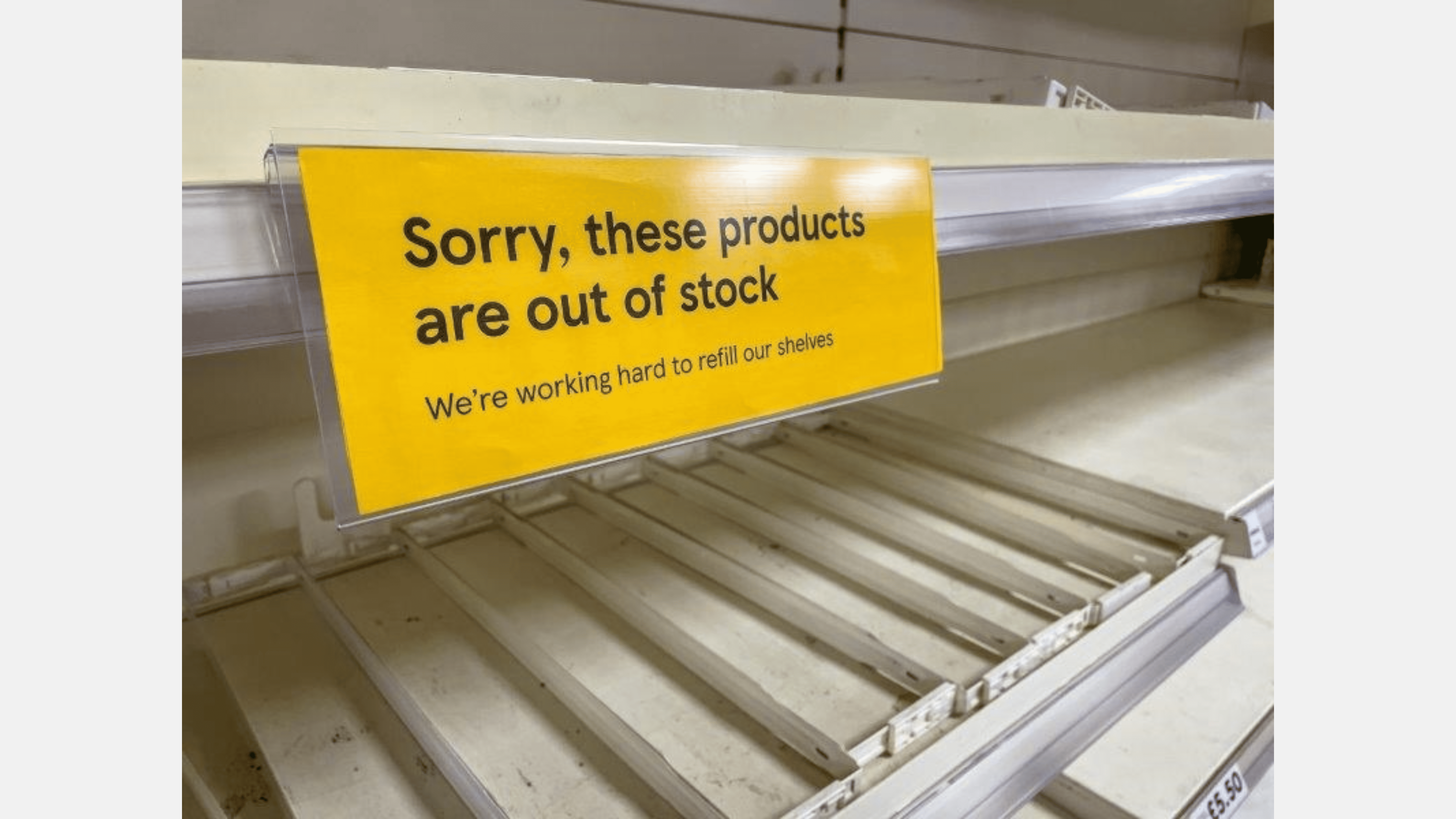
Stock availability
Out-of-stocks are one of the most direct drivers of lost revenue. Research from ECR Europe puts the average in-store out-of-stock rate at around 8%, and it climbs even higher during promotions. Regular shelf audits catch these gaps before they cost you sales.
Planogram compliance
Brands with strong planogram compliance consistently see higher sales per facing. If your products are in the wrong shelf location, or competitors have taken your space, a retail audit surfaces quickly.
Pricing accuracy
Incorrect shelf pricing erodes customer trust and, in some places, creates legal exposure. Audits verify that tagged prices match what’s in the system and what was communicated in promotional materials.
Promotional ROI
You can’t measure the return on a promotion if you don’t know whether it actually ran in-store. Many retail teams use tools such as the ROI calculator to estimate the impact of promotional execution and connect in-store activity to measurable business outcomes. Auditing promo execution, including signage, displays, and POS materials, is the only way to connect your spend to real outcomes.
Competitive intelligence
What’s happening on the shelf beyond your own products? Competitor facings, share of shelf, new SKU launches, and competitor pricing are all useful data points that a store visit report can capture at no extra cost.
Types of Retail Audits?
Not all retail audits look the same. Depending on what you’re trying to achieve, you might run one type regularly and others on a more targeted basis.
Merchandising audit
The most common type. A visual merchandising audit checks whether products are placed, positioned, and displayed according to your planogram and brand guidelines. It covers shelf facings, product sequencing, display compliance, and fixture integrity. If you have retail brand standards, this is the audit that checks they’re being met.
Retail sales audit
A retail sales audit looks at performance data at the store or SKU level. That includes sales volume, rate of sale, SKU contribution to category, and how performance varies by location. It’s useful for spotting which stores are underperforming and working out whether the cause is an execution issue or something more structural.
Loss prevention audit
Focused on shrinkage, waste, theft, and security compliance. Loss prevention audits look at stock discrepancies, waste management procedures, and security controls. This is a specialist area and worth a dedicated programme if it’s a priority for your business. (For a full breakdown, see our loss prevention audit guide.)
Health and safety audit
This looks at the store cleanliness, safety regulations, hazard management , and hygiene standards. Particularly important for food retail and hospitality environments. This is primarily done for restaurants where the risk of contamination is higher and standards are more codified.
Retail operations audit
A broader look at how a store is functioning. That covers staff behaviour, customer service standards, queue management, and whether standard operating procedures are being followed. Useful for franchise operators and multi-site retailers where consistency of experience matters.
Pricing and promotion audit
A targeted check on price tag accuracy, promotional mechanic compliance , and whether the right materials are in place for the current campaign. Often run at the start of a promotional period and again mid-campaign to catch execution issues early.
Who Conducts a Retail Audit?
The right answer depends on your network size, what you’re trying to measure, and how much objectivity you need.
Internal auditors such as area managers, district managers, and field sales reps are the most common choice. They know the estate, they have relationships with store managers, and they can act on findings straight away. The downside is consistency. Without a standardised form and clear scoring guidance, two auditors visiting the same store can produce very different results.
External auditors from third-party retail audit companies provide independent assessments. They’re particularly useful for large networks where internal capacity is stretched, or where you need to demonstrate compliance to a retail partner. If you’re evaluating providers, a retail audit software comparison guide is a good place to start.
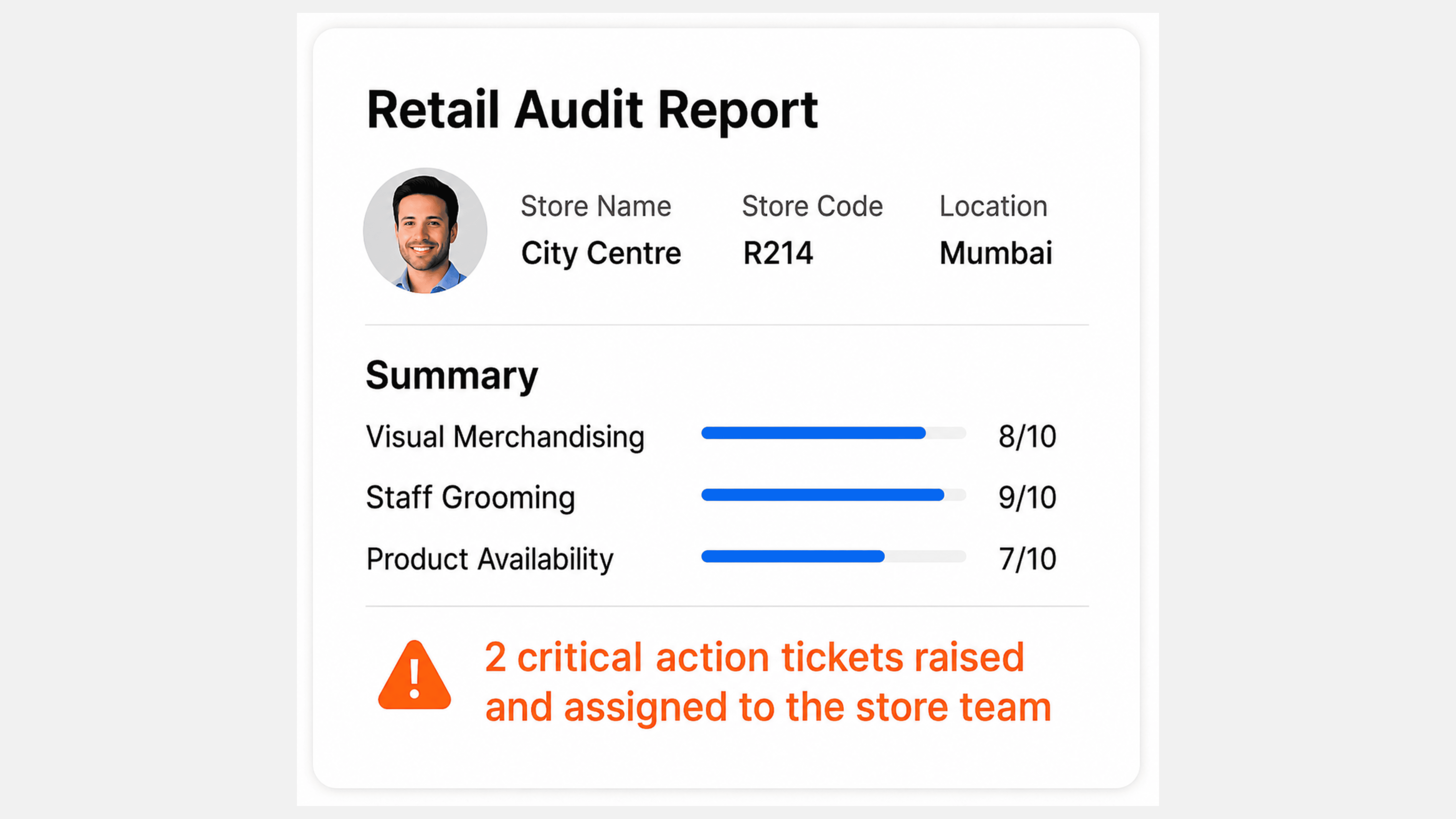
Technology-assisted auditing through mobile retail audit apps has changed how most teams approach this. Auditors use a structured digital form on a smartphone or tablet, capture photo evidence, and submit data in real time. It removes paper, cuts out transcription errors, and gives operations teams immediate visibility. Platforms built for field execution can also route findings directly into corrective action workflows, so nothing gets stuck in a spreadsheet.
How to Conduct a Retail Audit?
Most execution failures in retail auditing don’t happen in the store. They happen in the process around it. Here’s a step-by-step approach that works in practice.
Step 1: Define audit scope and objectives
Before anything else, be clear on what you’re trying to measure and why. Which product categories are in scope? Which stores? What retail KPIs will you track, such as planogram compliance percentage, out-of-stock rate, or promotional execution score? Without this clarity, you’ll collect data that’s hard to act on.
Step 2: Build or update the audit form
Your audit form is the backbone of the programme. Questions should be standardised across all locations so results are comparable. Avoid free-text where you can, since yes/no and scored questions produce cleaner data. If you’re using a digital platform, this is where you set up question logic, scoring weights, and photo requirements.
Step 3: Assign auditors and schedule stores
Decide whether this audit will be conducted internally, externally , or a mix of both. Set a schedule based on store risk level. High-volume or high-risk stores typically need more frequent visits. Where possible, avoid auditing the same store at the same time each cycle, since unannounced audits produce more accurate results.
Step 4: Conduct the in-store audit
Work through the form systematically. Photograph evidence at each step, as photos are the most effective way to verify findings and support corrective actions. Note any competitor observations if competitive intelligence is in scope. Don’t rush. A thorough audit is worth far more than a quick walkthrough.
Step 5: Submit and centralise data in real time
If you’re using paper forms or emailed spreadsheets, you’re building a delay between the audit and the insight. Digital audit platforms submit data instantly and aggregate results across the estate as audits come in. This is where the investment in tooling pays for itself.
Step 6: Review and analyse results
Look at results at the store level, the region level, and the question level. Which stores have recurring gaps? Which questions are consistently failing? Which areas of the store are the most problematic? The goal is to find patterns, not just individual scores.
Step 7: Assign corrective actions
Every finding that falls below standard needs an owner, a deadline, and a defined corrective action. This is where many audit programmes fall apart. Findings get logged, but nothing changes. Build action assignment directly into your audit workflow so it happens as part of the process.
Step 8: Verify and repeat
Close the loop. Before the next audit cycle, check that corrective actions were completed. Re-audit areas that failed. Over time, this drives real improvement rather than a cycle of identifying the same problems repeatedly.
How Often Should You Conduct Retail Audits?
There’s no single right answer, but frequency should be driven by store risk and business context, not just by what’s logistically convenient.
As a general guide:
-
High-volume or high-risk stores such as flagship locations, stores with a history of compliance failures, or new store openings: weekly or bi-weekly audits.
-
Standard estate: monthly is the most common cadence for operational and merchandising audits.
-
Promotional periods: run trigger-based audits at launch and mid-campaign. Don’t wait for the monthly cycle to find out a promotion never went up.
-
Annual full audit: a comprehensive operational and compliance review. Useful for setting baselines, assessing the full estate against brand standards, or preparing for partner reviews.
The rule of thumb: the higher the risk of execution failure and the higher the cost of getting it wrong, the more often you should be auditing.
Best Practices for Retail Audits
Getting the most from your retail audit programme comes down to a few things done consistently well.
Use digital tools
Paper forms and email submissions create lag, increase errors, and make it hard to pull results together across a large estate. A mobile retail audit app lets auditors capture data and photos in real time, submit instantly, and gives operations teams live visibility. It’s the difference between a programme that drives change and one that just generates paperwork.
Standardise your checklist
Consistent questions across all locations are what make results comparable. If two auditors are scoring planogram compliance differently, your data reflects auditor behaviour, not store performance. Take the time to build a clear, unambiguous form.
Audit regularly
Irregular audits create blind spots. Stores that are only audited occasionally learn to prepare for the visit rather than maintain standards all the time. Regular and occasionally unannounced audits build genuine execution discipline.
Act on the data
Findings without corrective actions are wasted effort. Every audit should produce a clear list of actions with owners and deadlines. If your programme is generating scores but not driving change, the process needs fixing.
Train your auditors
Scoring consistency depends on everyone being calibrated the same way. If you have multiple auditors across a large estate, invest time in aligning how they interpret and score questions. Reference photos and clear scoring rubrics help a lot.
Connect audits to broader compliance monitoring
Retail audits are most useful when they’re part of a wider retail compliance programme, linked to brand standards requirements, store compliance tracking, and operational reporting. Audit data on its own is useful. Audit data connected to the rest of your systems is much more powerful.
For more on building a connected programme, see our retail compliance guide and brand standards blog.
Conclusion
A retail audit is one of the most practical tools you have for finding out whether your in-store strategy is actually working. Without it, you’re making assumptions about what’s happening on the shelf.
A well-run audit programme gives you three things: visibility into what’s actually there, accountability for execution standards, and a clear process for fixing what’s not working. Over time, those three things add up to real improvements in compliance, availability, and revenue.
If you’re looking to build or improve your retail audit programme, a purpose-built retail audit platform like Amply can handle the heavy lifting, including digital forms, real-time data capture, action workflows, and estate-wide reporting in one place. Request a demo to see how it works in practice.
Ready to close the audit gaps? Book a meet to see how Amply works →
FAQs
What is a retail audit? A retail audit is a structured check of in-store conditions to ensure products are available, correctly placed, accurately priced, and properly promoted.
What are the 4 types of audits? The four key retail audit types are stock availability, planogram compliance, pricing accuracy, and promotional execution.
What are the 7 principles of retail? The 7 core retail principles are product, price, place, promotion, people, process, and presentation.
What is the retail audit process? The retail audit process involves planning the audit, collecting in-store data, analyzing findings, taking corrective action, and tracking performance over time.


