


Most retailers have these policies. They have the employee handbooks, the brand guidelines, the safety procedures, and the legal sign-offs. The problem is not that standards do not exist. The problem is that those standards break down between the binder at HQ and what actually happens on the store floor.
Compliance in the retail industry is as much an execution problem as a legal one. A pricing policy that is accurate on paper but wrong on the shelf is still a violation. A safety procedure that is documented but not followed still creates liability. And across a multi-location estate, those gaps multiply with every store, every shift, and every new hire.
Non-compliance in the US retail sector carries real consequences: regulatory fines, back-pay claims, lawsuits, product recalls, and reputational damage that takes years to recover from. Retail compliance requirements span federal and state law, internal brand standards, and vendor-set specifications, and retailers are expected to manage all of them at once.
This guide covers what retail compliance is , the key US regulatory requirements, the main areas you need to manage, and how to build a programme that actually works across locations.
What Is Retail Compliance?
Retail compliance is the process by which retailers adhere to federal, state, and local laws , internal brand standards, and industry regulations that govern how stores operate.
That definition covers two distinct directions. First, retailers must comply with external obligations set by government bodies and regulators. These include labour laws, consumer protection rules, product safety standards, data privacy regulations, and health and safety requirements. Failure to meet these carries legal and financial consequences.
Second, vendors and suppliers must comply with retailer-set requirements. Large retailers routinely impose their own compliance standards on the supply chain: delivery accuracy, labelling specifications, packaging requirements, and product documentation. This is retailer compliance from the other direction.
There are also three sources of compliance obligation in retail. Government regulation is the most obvious. Internal company policy covers operational standards like store presentation, promotional execution, and service protocols. And vendor or partner requirements add a third layer, particularly for large-format and grocery retailers.
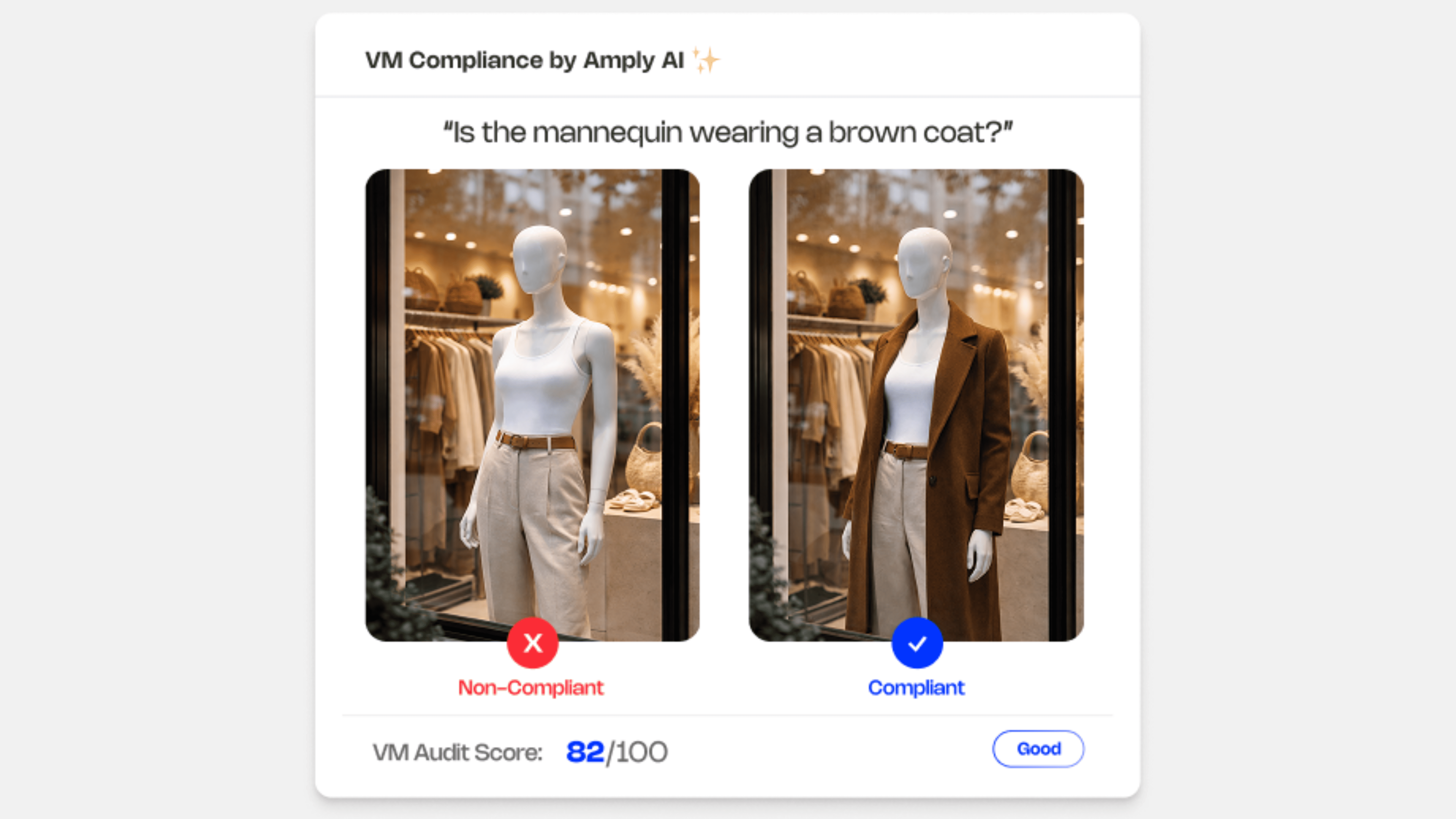
It is important to separate regulatory compliance from brand and operational compliance , because the two are often conflated. Regulatory compliance is externally imposed by law. Brand compliance is internally defined by the business. Both matter, both need to be verified at store level, and both need different management approaches. The place where most programmes break down is not in writing the policies but in verifying that they are being followed in every store, on every shift.
Why Retail Compliance Matters
The stakes for getting retail compliance wrong are significant and they sit across several areas.
Legal and financial risk. US regulators actively enforce retail compliance requirements. The Department of Labor pursues wage and hour violations under the FLSA. OSHA issues citations and fines for unsafe working conditions. The FTC takes action on deceptive pricing and advertising. Penalties range from back-pay awards running into millions of dollars to store closures in serious safety cases.
Brand reputation. A single publicised violation can undo years of trust-building. A labour dispute that reaches the press, a data breach that exposes customer payment information, or a product safety recall all generate headlines that are difficult to walk back. Customers and employees notice.
Multi-location consistency. Without a compliance framework, each location operates differently. Customers get inconsistent experiences, managers make different judgement calls, and the brand promise that exists at HQ does not match what happens in-store. Retail compliance standards are what create consistency at scale.
Operational efficiency. Compliance frameworks force standardisation. When procedures are clear and consistently followed, incidents go down, errors decrease, and stores run more efficiently. The cost of building a compliance programme is almost always lower than the cost of a serious non-compliance event.
Talent and reputation. Brands that operate ethically and demonstrate genuine compliance attract better staff and retain them longer. In a sector with historically high turnover, that matters more than most retailers acknowledge.
Key Retail Compliance Requirements in the US
No competitor provides a clear, named reference for US retail compliance requirements. The table below covers the primary federal frameworks every US retailer needs to understand.
| Regulation | Governing Body | What It Covers |
|---|---|---|
| FLSA (Fair Labor Standards Act) | Department of Labor | Minimum wage, overtime pay, and employee classification. A high-scrutiny area for hourly retail workforces. Back-pay liability can reach millions in class actions. |
| OSHA (Occupational Safety and Health Administration) | Department of Labor | Safe working conditions in stores and warehouses. Covers aisle safety, ladder use, emergency procedures, hazard communication, and injury reporting. Retailers face inspections and fines for violations. |
| FTC (Federal Trade Commission) | Federal Trade Commission | Truth-in-advertising, pricing accuracy, return policy transparency, and promotional claim compliance. The price on the shelf must match the price at checkout. |
| CPSC (Consumer Product Safety Commission) | CPSC | Product safety standards for items sold in-store, labelling accuracy, and mandatory recall response obligations. Retailers share liability for misleading or unsafe product labelling. |
| CCPA and state privacy laws | State-level regulators | Customer data collection, storage, consent, and disclosure rights. Expanding rapidly across states. PCI-DSS governs payment card data separately and applies to all retailers accepting card payments. |
| ADA (Americans with Disabilities Act) | Department of Justice | Physical store accessibility including aisle width, parking, signage, and accessible facilities. Increasingly applied to digital storefronts and e-commerce platforms as well. |
| EEOC (Equal Employment Opportunity Commission) | EEOC | Anti-discrimination in hiring and employment, harassment prevention, and accommodation requirements. Many states mandate manager and supervisor training. |
| EPA and EPR laws | EPA and state agencies | Packaging waste, energy efficiency, and extended producer responsibility requirements. Rules vary by state and are expanding, particularly in California, Oregon, and Colorado. |
State law adds another layer of complexity on top of all of this. Minimum wage rates, predictive scheduling requirements, pay transparency laws, and sick leave mandates all vary by state and sometimes by city. Multi-state retailers need to track all of them.
Key Areas of Retail Compliance
Retail compliance requirements map onto six broad areas. Each has its own regulatory framework, risk profile, and management needs.
Labour and wage compliance
This is the highest-scrutiny area for most US retailers. The FLSA sets the floor on minimum wage and overtime , but state and local laws often go further. Scheduling compliance is a growing area: cities including New York, Seattle, and Chicago now require advance notice of shifts, right-to-rest periods, and compensation for last-minute schedule changes. Worker classification errors, particularly around part-time and gig arrangements, are a significant source of back-pay liability.
Health and safety
OSHA standards apply to every retail store environment. Slip-and-fall prevention, aisle clearance, proper storage of heavy items, emergency exit access, and fire safety are all covered. Stores that also operate distribution or receiving areas face additional warehouse-specific requirements. Beyond regulatory obligation, daily safety checks protect customers as well as staff. A poorly maintained store is both a safety failure and a liability exposure.
Consumer protection and advertising
The FTC requires that prices advertised or displayed match what customers are charged. Promotional claims must be accurate and substantiated. Return policies must be clearly displayed. These are not just guidelines: retailers have faced FTC enforcement actions and class action lawsuits over pricing discrepancies and misleading promotional terms. Making sure shelf prices match the system, and that promotional mechanics are correctly applied at every location, is a core retail compliance requirement.
Product safety and labelling
The CPSC sets safety standards for products sold in-store , including labelling requirements and mandatory recall procedures. Retailers are not just passive sellers: if a product is sold with misleading or inaccurate labelling, the retailer shares liability. When a recall is issued, retailers must respond quickly, remove affected stock, and notify customers. Having clear procedures for this is a basic compliance requirement. For food products specifically, additional food safety compliance requirements apply.
Data protection and privacy
PCI-DSS applies to every retailer that accepts card payments and sets requirements for how payment data is stored and transmitted. Beyond that, CCPA and a growing number of state-level privacy laws govern how customer data is collected, used, and disclosed.
As digital transactions grow, so does the data compliance burden. Retailers who collect customer data through loyalty programmes, apps, or online storefronts need clear data handling procedures and regular reviews.
Supply chain and logistics compliance
Retail compliance in logistics is a distinct requirement layer, particularly for large-format and grocery retailers. Vendor compliance programmes typically cover on-time and in-full (OTIF) delivery standards, UCC-128 pallet and case labelling, electronic data interchange (EDI) requirements, and product documentation standards.
Ethical sourcing obligations are also expanding: labour practices, environmental standards, and supply chain transparency requirements are becoming more common and more enforced. Compliance problems in supply chains are often invisible until a shipment is refused or a vendor relationship breaks down.
Regulatory Compliance vs Brand Compliance: What Is the Difference?
This distinction rarely gets made clearly, but it is critical for anyone managing compliance across a retail operation.
Regulatory compliance is externally imposed by law. It is not optional. Failing to meet OSHA standards, pay employees correctly under the FLSA, or comply with FTC pricing rules exposes the business to enforcement action, fines, and litigation. These obligations are set by government bodies and apply regardless of what the business prefers.
Brand and operational compliance is internally defined. Planogram standards, promotional execution requirements, store presentation guidelines, and customer service protocols are set by the business itself. Failing to meet them does not create legal exposure in the same way, but it does erode brand consistency, customer experience, and the value of the standards the business has invested in building.
The practical risk of conflating the two goes in both directions. Treating brand compliance like a regulatory requirement leads to overly complicated checklists and exhausted store teams. Treating regulatory obligations like internal guidelines, something to follow when convenient, creates serious legal exposure.
Both types need to be verified at store level, but through different mechanisms. Regulatory compliance typically requires legal and HR audit trails, documentation, and formal reporting. Brand and operational compliance is verified through retail audits and store visits, carried out by area managers, field teams, or third-party auditors.
Understanding which type of compliance you are managing determines how you manage it. For more on the audit side, see our guides to retail audits and brand standards.
Retail Compliance Across Multiple Locations
Store compliance is where the gap between policy and reality shows up most clearly. Standards are written at HQ. They are communicated to regional teams, then to store managers, then to shift supervisors, then to hourly associates. Every step in that chain is a place where something gets lost.
Common failure modes across multi-location estates look familiar to anyone who has managed them. Compliance policy lives in a document that no one refers to after onboarding. Training is completed on a form but the knowledge does not stick. Audits happen infrequently or not at all. When failures are identified, the corrective action has no owner and no deadline, so nothing changes.
Consistent store compliance across a network requires a few things to be in place. Standardised operating procedures that are practical enough for store-level teams to follow. A regular cadence of compliance checks and retail audits that create visibility into what is actually happening. Real-time reporting that shows compliance status by location, not just in aggregate. And clear escalation paths so that when a failure is found, the right person is notified and a resolution is tracked.
Franchise and multi-brand operators face additional complexity here. Different ownership models, varying employment contracts, regional regulatory differences, and different levels of operator capability all affect how compliance programmes need to be designed and delivered. A franchisee in California faces different scheduling and data privacy requirements than one in Texas, and a compliance programme that ignores those differences creates risk.
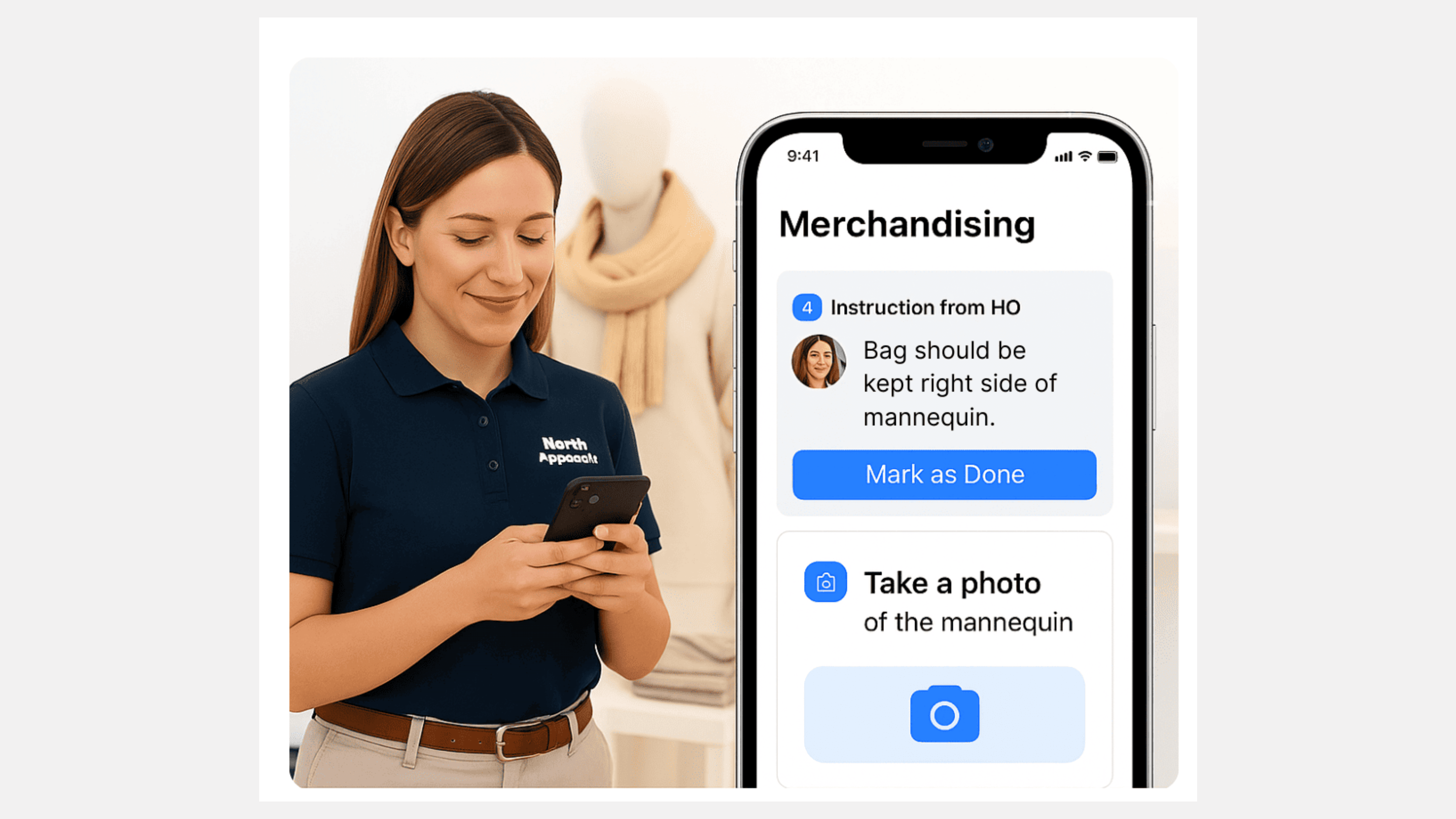
Retail audits are the primary mechanism for verifying store compliance at scale. Without a structured audit programme, compliance status across a multi-location estate is essentially unknown.
Common Retail Compliance Challenges
Even well-resourced compliance programmes run into the same problems repeatedly.
Keeping up with regulatory changes. Federal and state laws update frequently. Multi-state retailers face overlapping requirements that sometimes contradict each other. Minimum wage rates change, scheduling laws expand to new cities, and privacy legislation passes in new states. Without someone actively monitoring legislative changes by operating region, the compliance programme drifts out of date.
Inconsistent execution across locations. Compliance ultimately depends on individual managers and associates following procedures correctly on every shift. The larger the estate, the harder this is to verify without a structured audit cadence.
High staff turnover. Retail’s turnover rate is among the highest of any sector. Compliance knowledge that exists in the heads of experienced staff walks out the door regularly. Training programmes need to be designed for continuous delivery, not just onboarding.
Siloed compliance management. Legal, HR, operations, and loss prevention often manage different compliance obligations without a shared view of the overall picture. This creates gaps where things fall between teams and nobody owns them.
Supplier and vendor compliance. Extending brand requirements and regulatory obligations to third-party vendors is a recurring challenge. Vendor non-compliance is often invisible until it becomes a problem, whether that is a failed product recall, a labelling violation, or an OTIF penalty.
How to Build a Retail Compliance Programme
Most retail ops teams are not GRC specialists. Here is a practical step-by-step approach written for the people who have to make compliance work across a real store network.
Step 1: Map your compliance obligations
Start by identifying every applicable federal, state, and local law across your operating regions. Separate external regulatory requirements from internal brand standards. These are two different lists and they need to be managed differently.
Step 2: Assign ownership
Every compliance area needs a named owner. Labour compliance sits with HR. Store safety sits with operations. Data compliance sits with IT or legal. Brand standards sit with the field team. Without clear ownership, everything is everyone’s responsibility, which in practice means it is no one’s.
Step 3: Document standards and procedures
Translate each compliance obligation into procedures that store managers and associates can actually follow. This means plain language, not legal language. Procedures that require a lawyer to interpret will not be followed on the shop floor.
Step 4: Train the frontline
Compliance knowledge needs to reach the people doing the work: hourly associates, shift supervisors, and team leads. Training that only reaches management will not change what happens in-store. Given retail’s turnover rates, retail frontline training also needs to be ongoing, not a one-time onboarding event.
Step 5: Build a verification cadence
This is where most compliance programmes fall apart. Standards are documented and training is delivered, but no one checks whether any of it is actually being followed. Use retail audits and compliance checks to verify execution at store level on a regular schedule. A retail compliance auditor, whether internal or third-party, is the mechanism that turns a policy document into a functioning programme.
Step 6: Close the loop
Every compliance failure identified in an audit or check must trigger a corrective action with a named owner and a deadline. Findings without follow-through are documentation exercises. They create a paper trail but they do not improve compliance.
Step 7: Monitor regulatory changes
Assign someone in each relevant function to track legislative updates in every operating region. When laws change, procedures need to be updated and teams need to be retrained. This is not a one-off task.
Best Practices for Retail Compliance Management
Separate regulatory compliance tracking from brand compliance monitoring. They have different owners, different cadences, and different consequences. Running them together creates confusion about what is a legal requirement and what is an internal standard.
Move compliance off paper. Digital compliance tools and compliance checklist tools for retail create auditable records, give real-time visibility across the estate, and make it possible to spot patterns across locations. Paper-based compliance management is slow and creates gaps.
Make compliance part of daily operations. Compliance that only happens during a scheduled audit is not really compliance. Embedding checks into store opening and closing routines, shift handovers, and daily manager walks turns compliance from a periodic event into a habit.
Train continuously. Given the pace of staff turnover in retail, compliance training needs to happen regularly and repeatedly, not just at onboarding. Short, frequent reinforcement works better than long induction sessions that staff forget within a few weeks.
Use retail audits to verify compliance, not just report it. An audit that identifies failures but does not trigger corrective actions is a reporting exercise. The value of the audit is in what happens after it.
Build a response protocol before you need one. Define escalation paths, remediation steps, and timescales for non-compliance events before they happen. When a violation is identified, the response should already be clear.
Conclusion
Retail compliance is both a legal obligation and an execution discipline, and the two have to be managed together. Most brands are not failing because their policies are wrong. They are failing because the gap between a well-written policy at HQ and what actually happens in a store is wider than they realise.
The brands that get compliance right treat it as an operational programme, not just a legal function. They verify regularly, they act on what they find, and they build compliance into the daily rhythm of how their stores run.
This is exactly where Amply — retail store compliance software comes in. If you want tighter control, faster audits, and clear, actionable insights across every store, it is worth taking a closer look at how Amply can help you scale compliance without adding complexity.
Ready to close the retail compliance gaps? Book a meet to see how Amply works →
FAQs
What is retail compliance? Retail compliance is the practice of ensuring stores follow brand standards, legal rules, pricing policies, and agreed merchandising guidelines.
What are the 7 pillars of compliance? The 7 pillars of compliance are leadership commitment, risk assessment, policies and procedures, training and communication, monitoring and auditing, reporting mechanisms, and continuous improvement.
What are the 7 types of retailers? The 7 common types of retailers are supermarkets, department stores, specialty stores, convenience stores, discount stores, e-commerce retailers, and warehouse or wholesale clubs.
What are the 5 C’s of compliance? The 5 C’s of compliance are commitment, culture, communication, controls, and corrective action.


